
Smoking Accessories Explained: Materials, Glassware, Storage, and Care
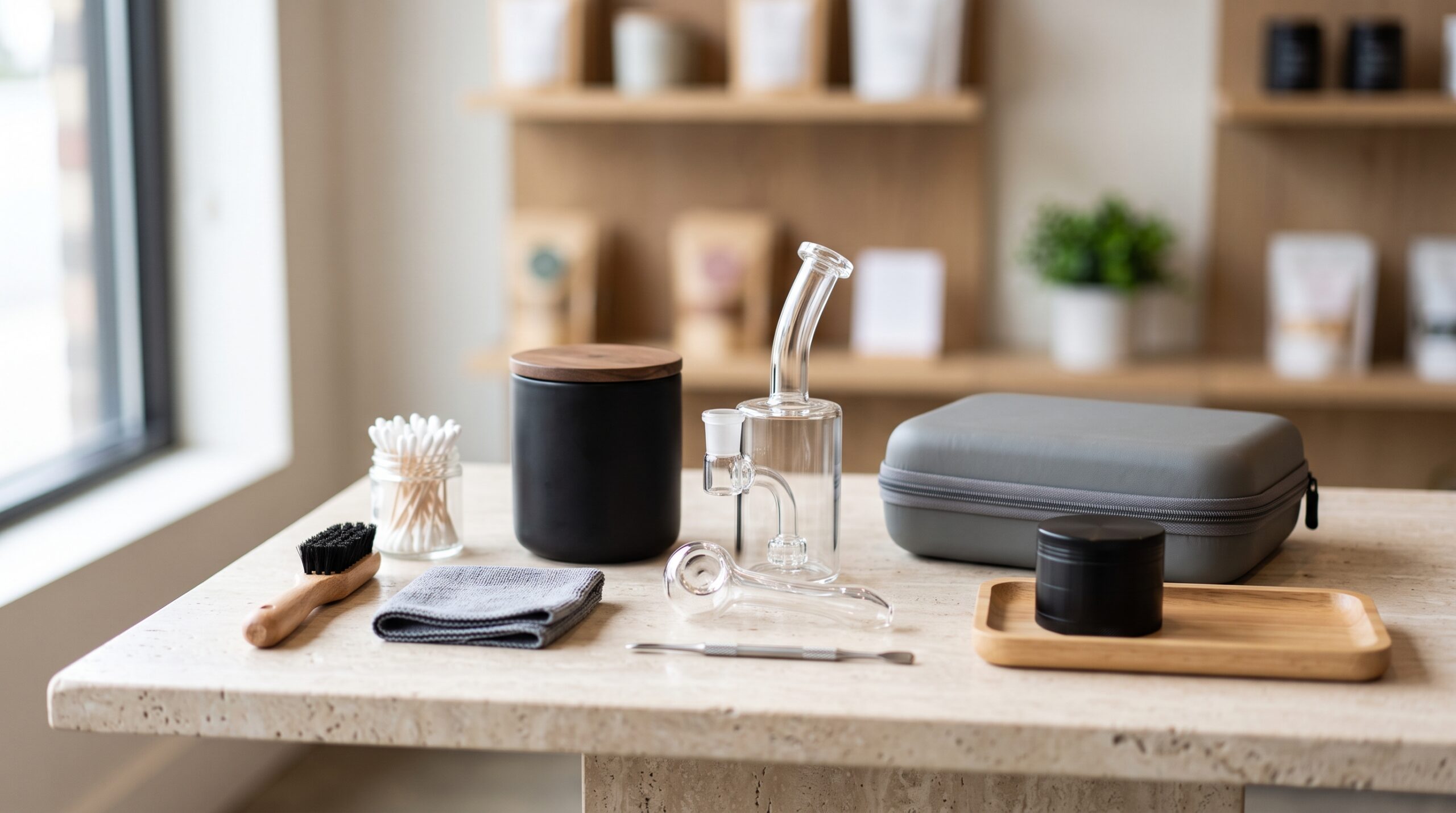
In this article 7 sections
Smoke shops often carry a wide range of accessories made from different materials, designed for different purposes, and requiring different levels of care.
For someone unfamiliar with the terminology, it can be difficult to understand the differences between common materials, glass construction, storage products, cleaning accessories, and other items found in modern smoke-shop environments.
This guide provides a general educational overview of common accessory categories, materials, construction characteristics, storage principles, and maintenance considerations.
The purpose is to help adult readers better understand product terminology and care without providing instructions for consuming controlled substances.
Understanding Smoke-Shop Accessories
The phrase smoking accessories can describe many different products.
Depending on the retailer and jurisdiction, these may include:
- Glassware
- Rolling accessories
- Storage containers
- Cleaning tools
- Cases
- Trays
- Screens
- Replacement components
- Organization products
- General maintenance accessories
The exact products available vary according to local law and retailer policies.
Why Material Matters
Accessory materials influence:
- Durability
- Weight
- Appearance
- Heat resistance
- Cleaning requirements
- Storage needs
- Product longevity
Common materials may include:
- Glass
- Silicone
- Metal
- Wood
- Ceramic
- Acrylic or other plastics
Each material has its own characteristics.
Glass Accessories
Glass is one of the most recognizable materials used in smoke-shop accessories.
It is valued for characteristics such as:
- Transparency
- Ease of visual inspection
- Resistance to many odors
- Variety of shapes
- Decorative possibilities
However, glass can also break if dropped or exposed to improper handling.
Borosilicate Glass
The term borosilicate glass appears frequently in discussions about accessory glassware.
Borosilicate glass is formulated differently from ordinary soda-lime glass and is widely used in applications where improved resistance to thermal stress is desirable.
Its characteristics have made it common in:
- Laboratory glassware
- Kitchen products
- Technical glass products
- Some specialty accessories
Not every glass product is identical, however.
Thickness, manufacturing quality, joints, and overall design can influence durability.
Glass Thickness
Consumers sometimes assume that thicker glass automatically means a better product.
Thickness can contribute to durability, but it is only one factor.
Other considerations include:
- Quality of construction
- Stress points
- Joint design
- Base stability
- Manufacturing consistency
- Overall shape
A thick product with poorly constructed weak points may still be vulnerable to damage.
Signs of Glass Quality
From a general product-awareness perspective, consumers may look for:
- Consistent walls
- Smooth joints
- Stable bases
- Clean finishing
- Lack of visible cracks
- Appropriate symmetry where expected
Handcrafted products may contain natural variations, but obvious structural defects deserve attention.
Silicone Accessories
Silicone is another material commonly found in accessory markets.
Products made from suitable silicone may be valued because they are:
- Flexible
- Lightweight
- Resistant to breakage
- Easy to transport
- Available in many shapes and colors
However, material quality can differ substantially between manufacturers.
Consumers should follow the manufacturer’s cleaning, temperature, and care instructions.
Metal Accessories
Metal is frequently used for:
- Tools
- Storage components
- Cases
- Trays
- Screens
- Structural parts
Common metals may include stainless steel, aluminum, and various alloys.
Metal accessories can offer durability, but care requirements vary depending on:
- Surface finish
- Coating
- Exposure to moisture
- Material composition
Products showing corrosion, sharp damage, or degraded coatings should be inspected carefully.
Ceramic Accessories
Ceramic can be used for decorative or functional accessories.
Its advantages may include:
- Weight
- Stable surfaces
- Decorative finishes
- Variety of shapes
Like glass, ceramic products can chip or break.
Cracked or damaged ceramic products may require replacement depending on their intended purpose.
Wooden Accessories
Wood has a long history in many traditional accessory categories.
Different woods vary in:
- Density
- Grain
- Moisture resistance
- Finish
- Maintenance requirements
Wood products should generally be cared for according to the manufacturer’s recommendations because excessive moisture or unsuitable cleaners may damage finishes.
Understanding Accessory Construction
Material alone does not determine product quality.
Construction matters too.
Useful characteristics to consider include:
- Stability
- Smooth edges
- Secure joints
- Consistent fitting components
- Ease of cleaning
- Replaceable parts
- Overall finish
Products designed for repeated handling should feel structurally sound.
Glass Joints and Connections
Some glassware includes fitted joints or removable components.
These areas deserve particular attention because they may be more vulnerable to:
- Impact
- Chipping
- Misalignment
- Residue buildup
Components should generally fit as intended without excessive force.
Forcing improperly fitting glass parts can increase the risk of damage.
Why Stability Matters
An accessory with a narrow or unstable base can be easier to knock over.
Product design should consider:
- Center of gravity
- Base width
- Overall height
- Weight distribution
Consumers should also consider the environment where an item will be stored.
Storage Is Part of Product Care
Proper storage can help protect accessories from:
- Dust
- Moisture
- Accidental impact
- Breakage
- Heat
- Direct sunlight
- Children or unauthorized users
Storage should be chosen according to the material and product type.
Protective Cases
Cases can be useful for fragile accessories or products that need to be transported.
Depending on the item, a case may provide:
- Impact protection
- Organization
- Separation between components
- Dust protection
- Easier transport
The interior should fit the product appropriately without excessive pressure.
Storage Containers
Storage containers vary widely in:
- Material
- Seal
- Size
- Transparency
- Odor resistance
- Moisture control
The best choice depends on what is being stored and the manufacturer’s recommendations.
For age-restricted products or accessories, secure storage may also be important.
Household Safety and Storage
Responsible storage is particularly important in homes with:
- Children
- Teenagers
- Pets
- Visitors
Age-restricted products and associated accessories should not be left where unauthorized individuals can easily access them.
Local laws may also establish specific storage requirements for certain products.
Cleaning and Maintenance
Regular cleaning can help maintain the appearance and condition of reusable accessories.
General care principles include:
- Following manufacturer instructions
- Using appropriate cleaning products
- Avoiding abrasive materials where unsuitable
- Drying components properly
- Inspecting products after cleaning
Specific cleaning methods depend heavily on the material.
Why Manufacturer Instructions Matter
A cleaner that is appropriate for glass may not be appropriate for:
- Silicone
- Wood
- Coated metal
- Plastic
- Painted surfaces
Using incompatible cleaning chemicals can cause:
- Clouding
- Surface damage
- Discoloration
- Degraded coatings
- Material weakening
When available, product-specific care instructions should take priority.
Inspect Accessories Regularly
Reusable products should be inspected periodically.
Look for:
- Cracks
- Chips
- Loose parts
- Deformed components
- Sharp edges
- Damaged seals
- Corrosion
- Material deterioration
Damaged products should not be treated as though they are in normal condition.
Glass Cracks and Chips
Cracked or chipped glass deserves particular caution.
Even a small defect can become a larger break under continued handling.
Sharp edges may also create injury risks.
Replacing structurally damaged glass is generally safer than continuing to handle an item with obvious defects.
Organizing Small Accessories
Small components are easy to lose.
Organization products may help separate:
- Replacement pieces
- Cleaning tools
- Cases
- Storage containers
- Small accessories
Dedicated storage can also reduce clutter and accidental damage.
Avoid Mixing Clean and Used Items
From a general hygiene perspective, keeping cleaned accessories separate from items awaiting cleaning can make storage more organized.
Dedicated containers or compartments can help maintain separation.
Heat Considerations
Some accessories may be exposed to heat during their intended lawful use.
Not all materials respond to heat in the same way.
Consumers should never assume that a material is heat-resistant simply because it appears durable.
Manufacturer specifications should be followed.
Product Labels and Packaging
Packaging can provide useful information about:
- Material
- Manufacturer
- Care instructions
- Safety warnings
- Country of origin
- Replacement parts
- Warranty
Keeping packaging or documentation for unfamiliar products can make future maintenance easier.
Handmade vs Mass-Produced Accessories
Smoke-shop accessories may be:
- Handmade
- Small-batch produced
- Machine manufactured
- Mass produced
Handmade items may feature:
- Unique shapes
- Artistic details
- Small variations
- Specialized craftsmanship
Mass-produced accessories may offer more consistent dimensions and easier component replacement.
Neither manufacturing style automatically guarantees quality.
Glass Art and Smoke-Shop Culture
Glassworking has developed into a recognized craft within smoke-shop culture.
Some glass accessories emphasize artistic characteristics such as:
- Color
- Pattern
- Sculptural form
- Technique
- Individual craftsmanship
This intersection between functional design and decorative glasswork has contributed significantly to modern smoke-shop culture.
Accessory Trends Change Over Time
Smoke-shop product categories continue to evolve.
Trends may be influenced by:
- New materials
- Manufacturing techniques
- Design preferences
- Legal changes
- Consumer demand
- Technology
Because terminology changes, educational resources should distinguish established material facts from temporary marketing language.
Marketing Terms vs Material Facts
Consumers may encounter labels such as:
- Premium
- Professional grade
- Heavy duty
- Artisan
- Laboratory quality
These terms may not always correspond to a standardized technical definition.
More useful information may include:
- Actual material
- Dimensions
- Thickness
- Manufacturing process
- Care instructions
- Warranty terms
Specific information is usually more informative than broad marketing claims.
Understanding Replacement Parts
Some accessories contain removable or replaceable components.
Before purchasing replacements, consumers should check:
- Dimensions
- Manufacturer compatibility
- Joint size
- Material
- Model information
Visually similar components are not always interchangeable.
Responsible Purchasing
Adults purchasing age-restricted accessories should understand:
- Local age requirements
- Applicable laws
- Retailer policies
- Product materials
- Care instructions
- Storage needs
Legal rules can differ significantly between jurisdictions.
Cannabis Accessories and Local Law
Some accessories may be classified differently depending on location and intended use.
Products that are lawfully sold in one jurisdiction may be regulated differently elsewhere.
High Vibe Smoke Shop does not provide legal advice.
Consumers should rely on current local regulations and official government information when legal questions arise.
Accessory Care Checklist
A simple general checklist can include:
After Purchase
- Review product materials.
- Keep care instructions.
- Check for obvious damage.
- Identify removable components.
During Ownership
- Store products securely.
- Keep fragile items protected.
- Clean according to material requirements.
- Inspect for wear or damage.
Over Time
- Replace damaged components.
- Check seals and connections.
- Review storage conditions.
- Dispose of unsafe or broken products appropriately.
Common Accessory Myths
Myth: Thicker Glass Can Never Break
All glass can potentially break.
Thickness is only one factor affecting durability.
Myth: One Cleaner Works for Every Material
Different materials can react differently to cleaning products.
Myth: Expensive Accessories Require No Maintenance
Higher price does not eliminate the need for cleaning, inspection, or careful storage.
Myth: All Silicone Is Identical
Material formulation and manufacturing quality can vary significantly.
Myth: Decorative Products Are Automatically Fragile
Design complexity alone does not determine durability. Construction quality and materials also matter.
Choosing Accessories More Carefully
Rather than focusing only on appearance, adult consumers can evaluate:
- Material
- Construction
- Stability
- Maintenance requirements
- Storage needs
- Replacement components
- Manufacturer information
This creates a more practical way to compare products.
Final Thoughts
Smoke-shop accessories include a broad range of products made from glass, silicone, metal, ceramic, wood, and other materials.
Understanding these materials helps consumers make sense of differences in:
- Durability
- Construction
- Cleaning
- Storage
- Maintenance
- Product longevity
For adult consumers, responsible ownership also includes following applicable laws, keeping age-restricted items securely stored, and replacing accessories that become damaged.
The most useful product knowledge is not simply knowing what an accessory is called. It is understanding what it is made from, how it is constructed, and how it should be properly maintained.
Responsible-Use Notice
This article is provided for general adult education about accessory materials, care, storage, and consumer awareness.
It does not provide instructions for consuming cannabis, tobacco, or other controlled substances and should not be interpreted as medical or legal advice.
Cannabis and tobacco laws vary by jurisdiction.
About the Author
Pauline Johnson writes educational content for High Vibe Smoke Shop covering smoke-shop culture, accessory materials, glassware, storage, maintenance, and responsible consumer education.
Her work focuses on helping adult readers understand product terminology and accessory care in a clear and practical way.

Pauline Johnson
More articles by this author